Under normal conditions, politics is theatre. Under emergency, politics is x‑ray.
Day to day, you are told that laws rule, that procedures decide, that “checks and balances” keep everyone honest. Then something hits (terrorism, war, pandemic, financial collapse), and suddenly the carefully‑staged constitutional drama is swept aside by a handful of people reading statements at podiums. That is when the mask slips.
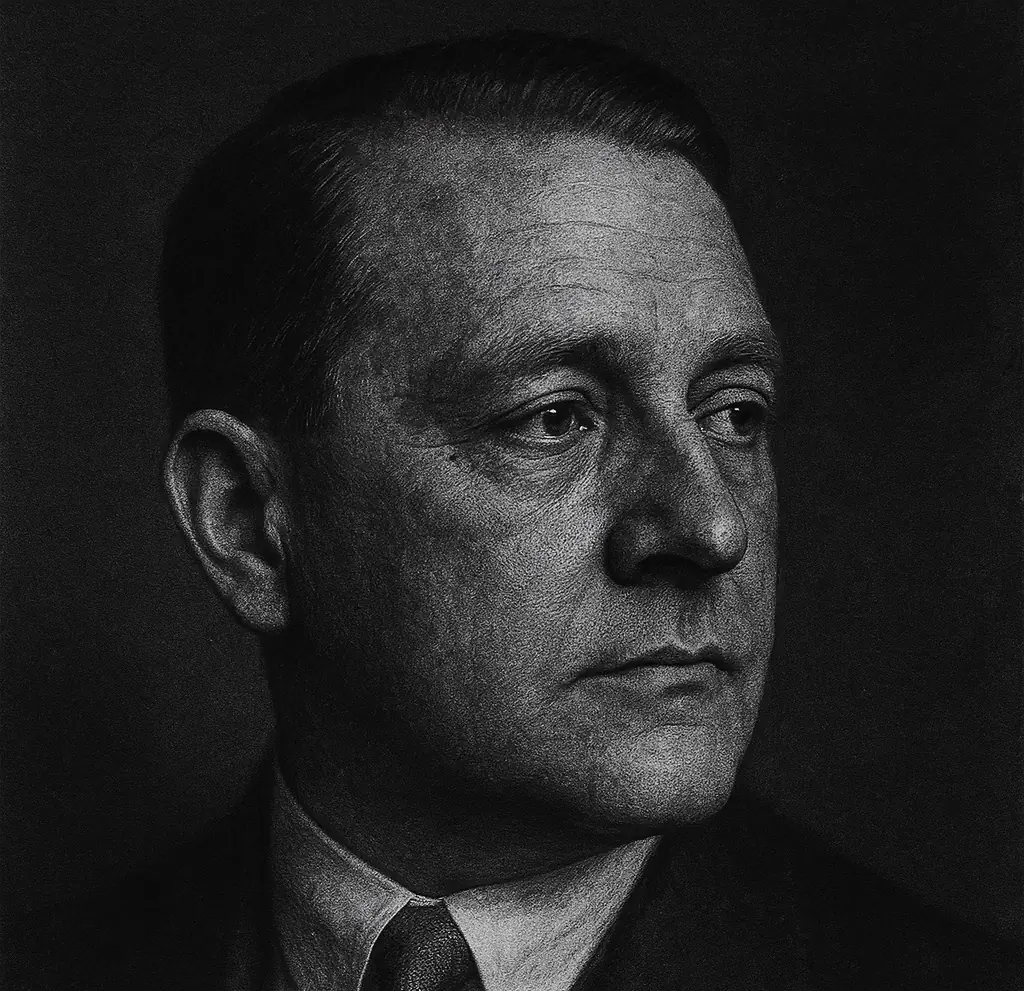
“Sovereign is he who decides on the exception.”
Carl Schmitt
Whoever can suspend the rules, redefine the situation, and get away with it is the one who actually holds power. Everyone else is set dressing.
Subject 01: Ruthless Definition
Schmitt’s simple, ruthless definition
Law textbooks tell you sovereignty is about the final legal authority in a system: Parliament, the Crown‑in‑Parliament, “the people”, the constitution. Schmitt brushes all that aside and asks one question: when things go to hell, who decides?
- In normal times, the legal order runs on autopilot. Judges judge, ministers sign, forms get stamped.
- In exceptional times, someone has to decide what counts as an emergency, which rules still apply, which don’t, and what new powers can be used.
- The actor who can make that decision, and not be overruled, is the sovereign, whatever the official charts say.
This is what he means by the state of exception. Think of it as the system’s “break glass in case of emergency” mode. The constitution is not abolished; it is put in a drawer while “temporary measures” run the show.
Subject 02: Political Theology
Law, myth, and political theology
Schmitt also pointed out that modern states are not nearly as rational and secular as they like to pretend. They simply moved the theological furniture around.
- “The People” is treated as an infallible source of legitimacy, even though “the people” never actually meet, decide, or act. Particular elites simply claim to incarnate them.
- “The Constitution” is treated almost as a sacred text, even when courts reinterpret it beyond recognition to suit present needs.
- “Human Rights” or “Public Health” function like dogmas. They are invoked to cut off argument, not to invite it.
In Schmitt’s terms, emergency is the new miracle. It is the moment when the sovereign steps out from behind the legal façade and says: “For reasons higher than the rules, we are now doing X."
Subject 03: Conditional Order
Normal time vs exception time
Under “normal” conditions, power works through routines. Parliament passes laws, media argue, the public are invited to choose between options and go back to sleep.
Normal Time
“We can’t do that, the law doesn’t allow it.”
Exception Time
“Given the extraordinary circumstances, we are temporarily overriding X in order to protect Y.”
Schmitt’s point is not that normality is fake, but that it is conditional. All those elegant rules are in force only as long as the people at the top say, “We are not in an emergency.”
Subject 04: Diagnostic Questions
Crises as power stress‑tests
Crises are stress tests for constitutions. They answer questions that the textbook examples politely ignore. Schmitt’s diagnostic questions are brutal but useful:
- Who can declare an emergency?
- Who decides when it ends?
- Who can suspend fundamental rights, and on whose authority?
- Whose orders get obeyed by the police, the army, the bureaucracy, even if courts grumble?
The real sovereign is whoever controls the narrative of necessity and commands the coercive organs to act on it. Your ballot paper is not an emergency power. A televised briefing is.
Subject 05: The Operating System
The pandemic blueprint: emergency as operating system
The pandemic was a gift‑wrapped case study in Schmittian sovereignty. Small and medium businesses destroyed; data‑collection and digital identity infrastructure accelerated, and all of it justified by “Protect the NHS” and “The science is clear.”
Schmitt would shrug and say: of course. The exception is not the breakdown of the system; it’s how the system really works when it matters. Normality is the holiday; emergency is the job.
Subject 06: Order vs Argument
Decisionism: authority before argument
Schmitt’s position is often called decisionism: the idea that, in the last instance, order rests not on rules but on a decision by some concrete authority.
At the edge of the system, you hit a wall where there are no further rules explaining why this institution, this court, or this monarch gets to decide. There is just a recognised fact of power. Someone has to say “this is how it’s going to be”, and others have to accept it or be forced to.
Subject 07: Detonating Narratives
Liberal myths under pressure
Myth 1: The rule of law is supreme.
Reality: Law applies until the sovereign declares an exception. Then it is selectively suspended.
Myth 2: Separation of powers protects us.
Reality: In emergency, the branch that can call and manage the exception dominates. Courts can be bypassed.
Myth 3: The people are sovereign.
Reality: The people cannot decide in real time. At best, their will is ventriloquised by those in command. Your role shrinks to staying at home and clapping on Thursdays.
Subject 08: The Political Core
Friends, enemies, and emergency targets
In emergencies, the friend–enemy distinction sharpens. Anti‑terror laws broaden to include dissidents; health emergencies expand to cover gatherings that are politically inconvenient.
The logic is simple: 1. Declare emergency. 2. Define an enemy category. 3. Concentrate power. 4. Normalise and extend. Schmitt’s point is that this is not a bug of liberal states, but their basic operating logic under stress.
Subject 09: Tactical Filters
How to read crises without the fairy tales
- Watch the coercive orders. Ignore the speeches. Watch who issues orders to the police and whose orders actually stick.
- Look for the permanent shift. Watch if sunset clauses really sunset or quietly roll on.
- Note who benefits from non-decision. When courts refuse to hear cases in charged moments, they are deciding to let the power bloc prevail.
Subject 10: Living with the mask off
Strategic Result
Schmitt is not comfortable reading. He tells you that, underneath it all, there is always the possibility that someone will decide you are the problem, and that “for everyone’s safety” your rights no longer apply.
Stop confusing legality with justice. Stop believing that crises are neutral events managed by disinterested experts. When the mask slips, you are not glimpsing a temporary aberration. You are seeing the permanent core: rule by a minority that can, when it feels threatened, step outside its own rules. Everything else is décor.
Manual Integration
Further Orientation
The mask is off. The next step is understanding the protocol: how to navigate a world where the exception is the rule.